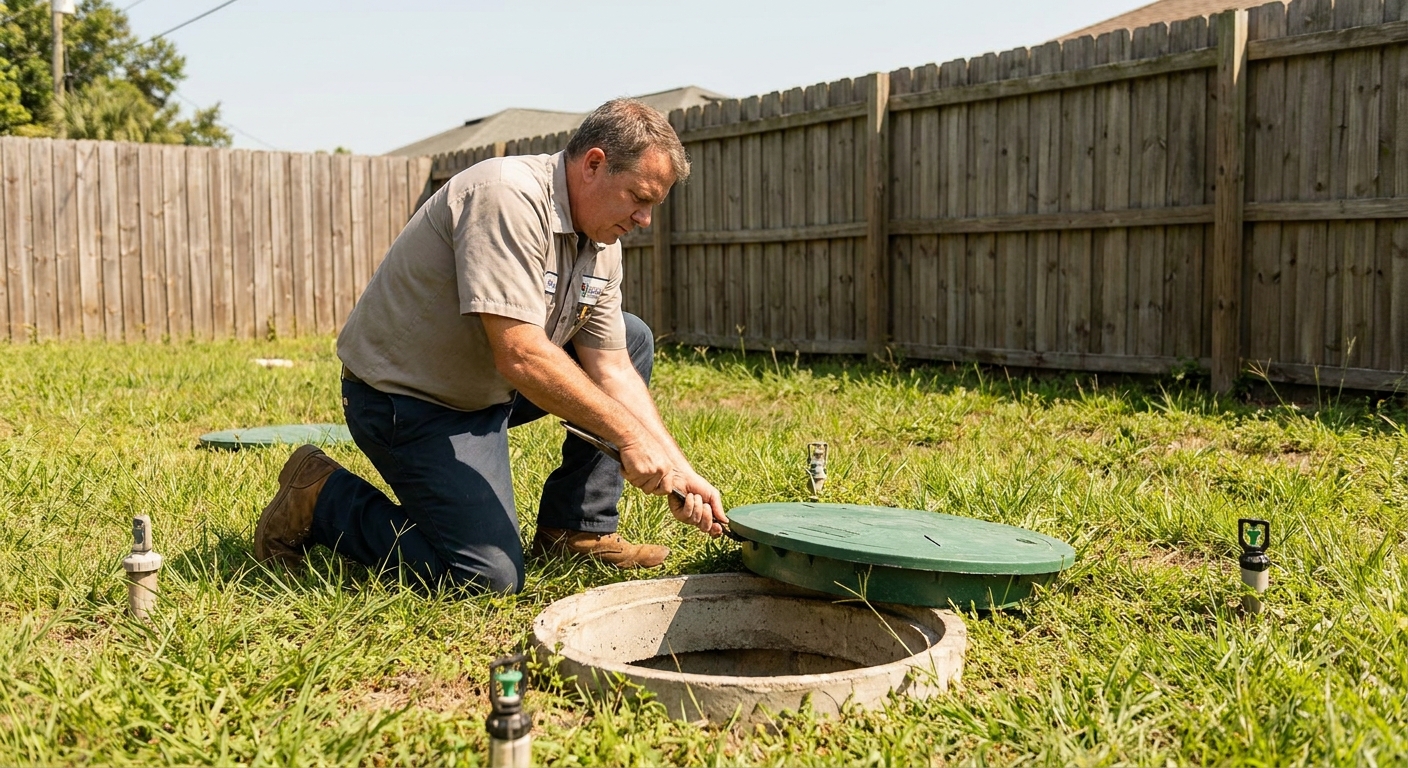
Drive twenty minutes outside downtown Tampa in almost any direction and the plumbing conversation changes completely. Inside the urban core, you’re on municipal sewer. Out toward Thonotosassa, Dover, Odessa, or the University/USF area, a real share of homes are still on septic, and some neighborhoods are in the middle of county-driven conversions from septic to sewer right now. Knowing which system your home runs on, and what that means for maintenance, changes how you should think about your plumbing entirely.
Where septic is still common around Tampa
Septic systems remain widespread in the rural and semi-rural fringes of Hillsborough and Pasco counties. The University/USF area still has roughly 1,300 homes on well and septic, even with 50,000 students living nearby, and the county has been actively working on converting those properties to sewer service. Thonotosassa and Dover, both agricultural areas with larger lots, run heavily on septic and well water, as does much of rural Pasco including Odessa, Dade City, San Antonio, and Plant City’s outer edges. Seffner has a meaningful share of septic on its unincorporated fringe as well.
If you’re buying in one of these areas, don’t assume sewer just because you’re inside what feels like a suburban neighborhood. Confirm directly with the seller or the county utility department which system the property is actually on.
How septic systems actually work
A septic system treats wastewater on-site instead of sending it to a municipal treatment plant. Wastewater flows from the house into an underground septic tank, where solids settle and partially decompose, and the clarified liquid flows out into a drain field, where it filters through soil and is naturally treated before rejoining the groundwater.
The whole system depends on that drain field functioning properly, which means the soil around it needs to stay permeable and the tank needs to be pumped on a regular schedule so solids don’t build up and overwhelm the drain field.
What septic maintenance actually requires
Septic tanks need pumping roughly every 3 to 5 years for an average household, though usage, household size, and tank capacity all affect the exact interval. Skipping pumping is the single most common cause of septic failure we see, because solids that should have been pumped out eventually overflow into the drain field, clogging it with material it was never designed to filter.
Beyond pumping, septic homeowners need to be more careful about what goes down the drain than sewer homeowners do. Grease, “flushable” wipes, excess chemicals, and even high volumes of laundry in a short window can all stress a septic system’s balance. Garbage disposals are generally a bad idea on septic, since they add solid waste directly to the tank at a much higher rate than a system is typically sized for.
Signs of septic trouble include slow drains throughout the house, sewage odor near the tank or drain field, unusually lush or soggy grass over the drain field area, and gurgling drains. These overlap with the warning signs of a failing sewer line, so if you’re not sure which system you have, that’s worth confirming before troubleshooting.
What’s involved in a septic-to-sewer conversion
Where county sewer lines have been extended into a formerly septic neighborhood, like parts of the University/USF area, homeowners are typically required to connect within a set timeframe once service becomes available. The conversion involves running a new lateral line from the house to the street connection point, decommissioning the old septic tank (which usually means pumping it out completely and either filling it with sand or removing it, per county requirements), and paying a connection fee plus the cost of the actual plumbing work.
Conversion costs vary widely based on distance from the house to the sewer connection point and whether the old septic tank needs to be fully removed or can be filled in place, but homeowners in an active conversion area should budget for a real project, not a minor fee.
The pros and cons in plain terms
Sewer service means no tank to maintain, no pumping schedule to track, and generally fewer restrictions on what you can put down the drain, but it comes with a monthly utility bill and zero on-site control if the municipal system has a problem upstream of your house.
Septic means no monthly sewer bill and full on-site treatment, but it puts the maintenance responsibility entirely on the homeowner, and neglecting it leads to expensive drain field failures that can run into the tens of thousands to fully replace.
Neither is inherently better. It depends on your property, your habits, and whether you’re in an area where the county has already decided sewer is coming whether you want it or not.
Buying a home and not sure which system it has
If you’re house hunting in Thonotosassa, Dover, or the rural edges of Pasco, don’t assume anything based on the neighborhood looking suburban. Ask the seller directly, and confirm with the county utility department if there’s any doubt, since a septic system that hasn’t been maintained is a real expense you want to know about before closing, not after. A pre-purchase septic inspection, checking the tank condition and drain field function, is worth the cost on any older septic property, the same way a home inspection covers the roof and the foundation. Our guide to septic tank inspection in Tampa Bay covers what one costs, who’s legally allowed to perform it, and which county office holds your system’s permit file.
What we’d tell you either way
If you’re on septic, get on a pumping schedule and stick to it, that alone prevents most of the expensive failures we see. If you’re facing a mandated conversion, get a real quote on the lateral line work before the deadline pressure sets in, since conversion timing sometimes affects pricing and contractor availability. And if you’re not actually sure which system your house is on, that’s the first thing to confirm, because the maintenance approach is completely different.
Call Tampa Plumbing Pro at (813) 590-0625. We service both septic and sewer-connected homes across Hillsborough and Pasco, and we’ll help you figure out exactly what you’re working with.