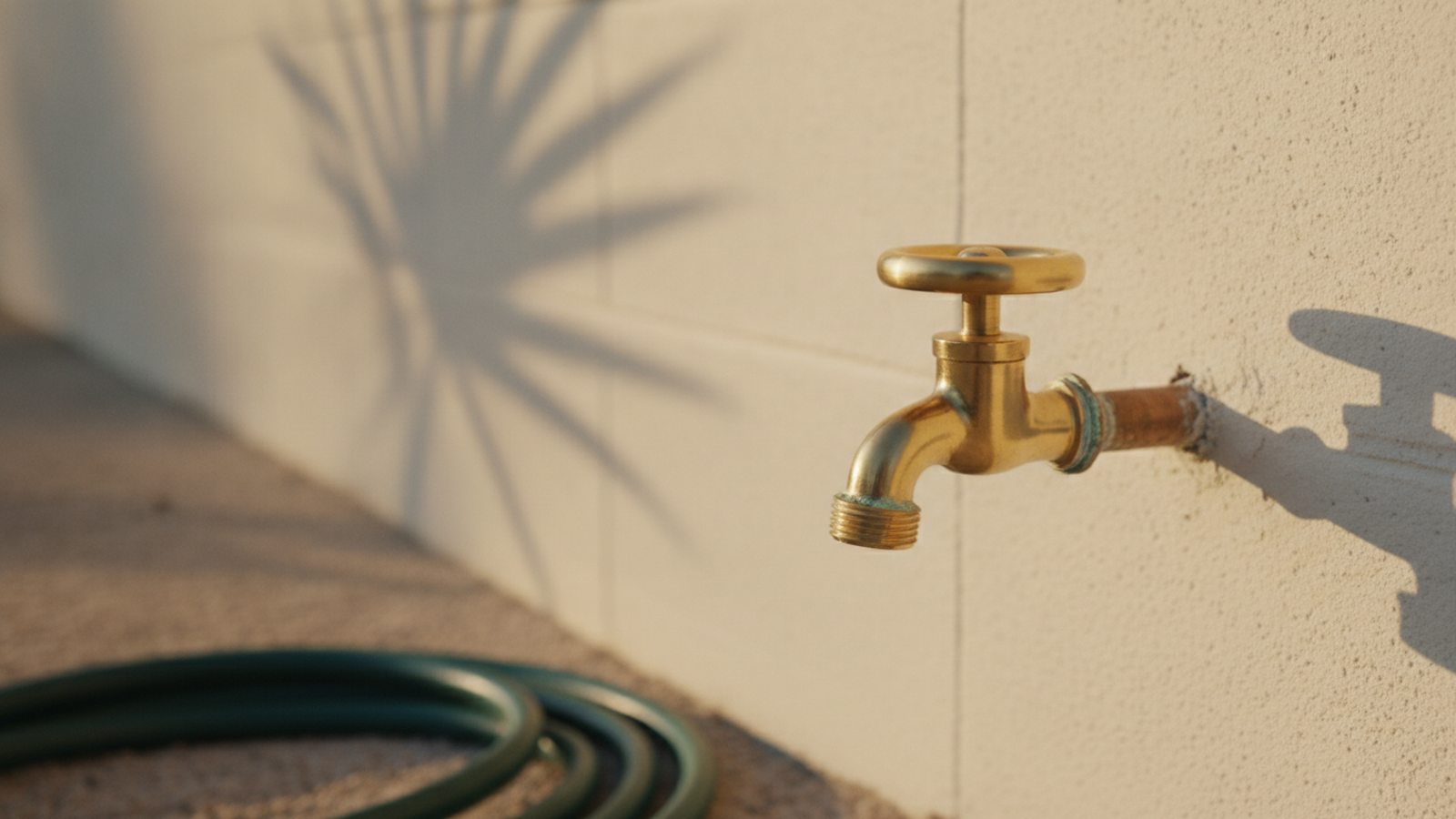
Hose bib replacement cost in Tampa Bay depends first on whether the plumber can repair the valve or has to replace the fixture, then on the pipe and wall connection behind it. For Gulfport homes, replacing corroded exterior fittings with corrosion-resistant brass runs $150 to $450 per fixture, depending on access and related pipe repair.
What decides hose bib replacement cost?
Two boundaries control the bill: the condition of the valve and the wall connection behind it. A leaking stem might just need new packing. A corroded body or damaged seat can make replacement the better path.
Pricing for faucet and fixture installation runs $150 to $300 in labor, plus the fixture. If a related shutoff or supply valve also needs replacement, that work adds $50 to $100 per valve.
Access changes the job quickly. A solid exterior stub lets the plumber work right at the wall. A loose, cracked, or badly corroded stub extends the repair into the supply pipe. Stucco, block, siding, and interior finishes determine how that connection can be reached and closed again.
Florida Building Code Section 105.2 separates leak repair from fixture replacement. Its plumbing exemption covers repairing leaks in pipes, valves, or fixtures only when the work doesn’t replace or rearrange those parts.
A new washer or fresh packing can sit inside that repair exemption. Replacing the hose bib itself crosses the exemption’s stated boundary. The building department serving the property decides how that boundary applies to the address and job.
If a local department applies a general plumbing trade permit, the City of Tampa’s published residential line is $120. Its Florida Building Permit Surcharge is 2.5% of permit value or a $4 minimum. Hillsborough County’s residential Plumbing (General) line is $130. These are jurisdiction-specific permit lines, not the total cost of the work.
Why do Tampa Bay hose bibs fail?
Tampa Bay hose bibs face salt air, strong sun, and hard-water scale. That’s a different story from the frost protection that dominates national cost guides.
Salt air reaches exposed fittings around South Tampa, Gulfport, and the Gulf beaches. It works into threads, handles, fasteners, and the joint at the wall, and it doesn’t stop. The plumbers we send use corrosion-resistant brass near the water when replacement makes sense.
Sunlight bakes exposed handles, seals, and hose connections. Tampa Bay water also runs 11 to 17 grains per gallon in hardness. Scale can crust around the stem, vacuum breaker, and outlet threads.
A drip from the spout points toward an internal sealing problem. Water around the handle points toward the stem or packing. Moisture entering the wall needs more attention because the visible valve isn’t always the only leaking part. Leak detection can isolate that hidden source before the wall is opened.
What vacuum breaker does a Florida hose bib need?
The current residential code requires backflow protection for covered hose connections. Florida Building Code, Residential, Section P2902.4.3 states:
“Sillcocks, hose bibbs, wall hydrants and other openings with a hose connection shall be protected by an atmospheric-type or pressure-type vacuum breaker, a pressure vacuum breaker assembly or a permanently attached hose connection vacuum breaker.”
The section has two exceptions. One covers water heater and boiler drain valves used only for draining. The other covers clothes-washer supply valves when backflow protection is otherwise provided or built into the machine. Neither exception reaches a garden hose bib, so the requirement stands there.
The vacuum breaker blocks contaminated water from moving backward through the hose connection. That risk shows up when a hose sits underwater or connects to a chemical applicator.
The City of Tampa Water Department tells homeowners to place a hose bibb vacuum breaker between the outdoor spigot and garden hose. Its examples include hoses submerged in buckets, sinks, ponds, pools, car radiators, and chemical applicators.
A hose-connection vacuum breaker isn’t the same thing as a larger irrigation or property backflow assembly. Our backflow testing guide explains where those devices enter the plumbing system.
What changes with a reclaimed-water spigot?
A reclaimed-water spigot follows a separate City of Tampa inspection path. It isn’t treated like an ordinary potable hose bib that’s mounted on the wall.
The city’s residential irrigation and reclaimed-water page lists three steps: PLB-Reclaimed Water, a Verification of Completion Affidavit, and PLB-Final. The page also states, “Plumbing trade permit fees collected by the City of Tampa Construction Services Division still apply.”
That distinction matters at homes with both potable and reclaimed supplies. The City Water Department says all irrigation systems require backflow prevention. It also requires approved protection for the potable supply when a property connects to both systems.
The plumber should identify which line feeds a reclaimed-water spigot before changing it. Outside City of Tampa jurisdiction, the local utility and building department set their own process.
Should the hose bib be repaired or replaced?
The leak’s location, the fixture’s condition, and the water source point toward the right scope.
| Condition | What it usually means | Sensible path |
|---|---|---|
| Water appears around the handle while the valve is open | The stem packing or seal isn’t holding | Repair the packing if the fixture body and wall connection remain sound |
| The closed spigot continues dripping from the outlet | The internal seal or seat isn’t closing | Repair a serviceable valve or replace a badly worn fixture |
| The body is cracked, heavily corroded, or loose at the wall | The problem extends beyond a simple washer | Replace the fixture and inspect the exterior supply stub |
| The wall becomes damp when the spigot runs | The hidden connection or supply pipe may be leaking | Stop using the fixture and locate the leak before replacing parts |
| The spigot connects to reclaimed water | The line follows a separate regulated path | Confirm the connection and required inspections before work begins |
A cheap washer doesn’t solve a split body, and a new hose bib won’t solve a cracked pipe inside the wall. The estimate that’s actually useful comes after the plumber identifies that boundary.
An active leak that won’t stop after the private shutoff is closed calls for emergency plumbing. Water moving into block, stucco, or an interior wall can turn a small exterior repair into a larger access job.
How does a plumber replace an outdoor spigot?
A clean replacement begins at the home’s private water shutoff. The City of Tampa says, “The fastest way to shut your water off is to locate your private shut off valve, typically placed on the side of your home or structure.”
Our guide to shutting off your water in an emergency shows what that valve looks like and where to start. Once the water’s isolated, the plumber relieves pressure and examines the hose bib connection.
The exterior fixture has to come free without twisting the supply pipe behind the wall. The plumber supports that connection, removes the failed fixture, and checks the exposed stub. Corrosion, cracked pipe, or movement inside the wall changes the repair scope.
The new fixture then gets the required hose-connection protection. After restoring water, the plumber checks the valve, threaded connection, wall penetration, and vacuum breaker for leaks.
Frequently asked questions
How much does hose bib replacement cost in Tampa Bay?
For corroded exterior fittings in Gulfport, replacement with corrosion-resistant brass runs $150 to $450 per fixture. Access and related pipe repair decide where the job lands in that range.
Broader faucet and fixture installation pricing runs $150 to $300 in labor, plus the fixture. Those scopes shift when the wall stub, shutoff, or supply pipe also needs work.
Can a plumber repair a leaking hose bib without replacing it?
A plumber can often repair leaking packing or an internal seal when the fixture body remains sound. That narrower repair stays on the repair side of Florida Building Code Section 105.2.
Cracks, severe corrosion, damaged threads, or a loose wall connection point toward replacement. The fixture has to be opened and inspected before that call is clear.
Does a Florida hose bib need a vacuum breaker?
Current residential code requires approved vacuum-breaker protection for covered hose connections. Its two listed exceptions apply to certain drain valves and clothes-washer supplies, not garden hose bibs.
The device protects the potable line when a connected hose ends up submerged or attached to a chemical applicator.
Does replacing a hose bib require a permit?
Florida’s code exempts certain leak repairs that don’t replace or rearrange valves, pipes, or fixtures. Replacing the hose bib crosses that exemption’s stated boundary.
The local building department decides how it processes the replacement at a specific address. Permit fees and procedures differ by jurisdiction.
Is a reclaimed-water spigot handled differently?
Yes. A reclaimed-water spigot follows a different connection and inspection path from a potable hose bib in City of Tampa jurisdiction.
The plumber has to identify the water source before changing the fixture. That protects the separation between reclaimed and potable piping.
When to call us
Call when the fixture’s badly corroded, the wall connection moves, or the leak keeps coming back after a packing repair. Tampa Plumbing Pro is available 24/7 across Hillsborough, Pinellas, and Pasco counties, and we’ll match you with a licensed local plumber.
Call us at (813) 590-0625.