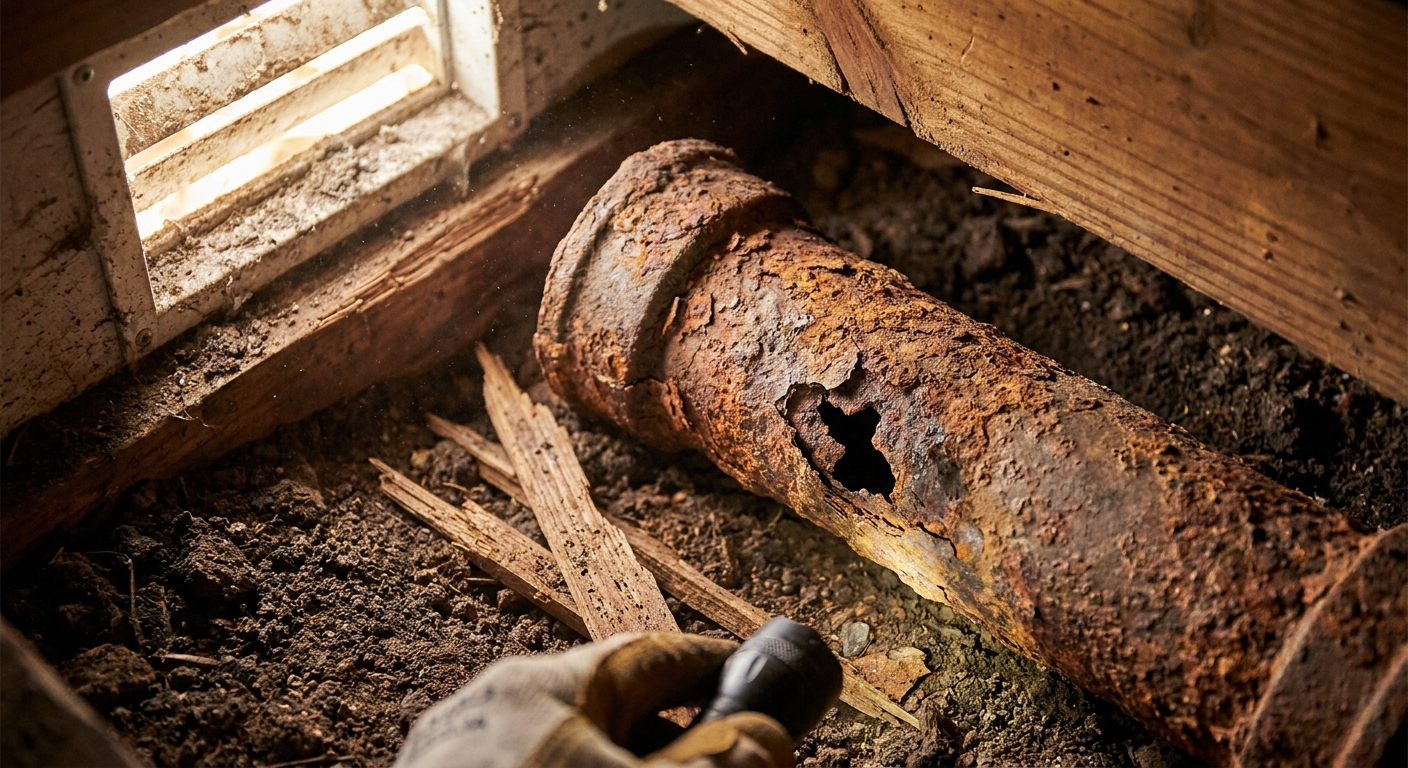
St. Petersburg’s charm is its old bungalow neighborhoods, Old Northeast, Kenwood, Roser Park, Historic Uptown, streets full of homes built in the 1920s through the 1950s with real character. What most of those homes still have, quietly running underground and inside the walls, is the original cast iron drain and sewer piping. It was built to last decades. It’s now had those decades, and a lot of it is failing.
Why St. Pete specifically has so much of it
St. Petersburg’s median home build year sits around 1969, with roughly 42% of the housing stock going up between the 1940s and 1960s and only about 13% built after 2000. Cast iron was the standard material for drain, waste, and vent (DWV) piping through most of the 20th century before PVC took over in the 1970s and 80s. If your St. Petersburg home predates that shift, and given the city’s build era a huge share do, there’s a strong chance the drain lines carrying wastewater out of your house are still original cast iron. A house that old raises the supply-side question too, which is whether you have lead pipes anywhere in a Tampa Bay home and how to check.
How cast iron fails
Cast iron doesn’t fail the way plastic pipe fails. It corrodes from the inside out over a period of decades, as the interior surface reacts with the waste, water, and soil gases passing through it. That corrosion builds up as rust and scale along the pipe walls, which narrows the effective diameter and roughens the interior surface. A rough interior grabs waste and debris instead of letting it flow through, which is why older cast iron systems get slow drains and backups long before anyone realizes the pipe itself is compromised.
Eventually the corrosion eats all the way through the pipe wall, creating cracks, holes, or full pipe collapse. Cast iron piping also tends to crack along its length as the metal weakens structurally, sometimes triggered by nearby soil shifting, tree root pressure, or even just the vibration of nearby construction.
The warning signs before it’s an emergency
Slow drains throughout the house, not just one fixture. If every sink, tub, and toilet is draining slower than it used to, that’s usually a main line problem, not a local clog, and cast iron scale buildup is the classic cause in a home this age.
Gurgling sounds from drains or toilets. Air trapped behind a partial blockage in the main line makes a gurgling noise as it escapes back up through fixtures. It’s one of the earliest audible signs something’s wrong further down the line.
Sewage smell in the yard or near the foundation. Cracked cast iron below ground can leak wastewater into the surrounding soil before it ever backs up inside the house. A persistent sewage odor outside, especially near where the main line runs, is a strong signal.
Unusually lush or soggy patches of grass along the pipe route. Wastewater leaking underground acts like fertilizer. A suspiciously green strip of lawn running from the house toward the street, especially if it’s damp when the rest of the yard isn’t, often traces the path of a leaking sewer line.
Rust-colored water or rust flakes in the toilet tank or drains. As cast iron corrodes internally, rust particles can work loose and show up in standing water, particularly in a toilet tank that’s been sitting.
Multiple backups in a short window. One clogged drain is a routine drain cleaning call. Two or three backups across different fixtures within a few months usually means the main line itself has a structural problem, not a one-off clog.
What inspection actually looks like
We run a sewer camera down the line to see the actual interior condition, not guess from symptoms. The camera shows us exactly where corrosion, scale buildup, cracks, or root intrusion are happening, and how much of the line is affected versus still sound. This matters because cast iron failure is rarely uniform. Some sections of a line can be in reasonable shape while others are close to collapse, and the camera tells us which is which before we recommend anything.
Repair versus replacement
For localized damage, a targeted sewer line repair can cut out a section and replace it with PVC, tied back into the remaining cast iron. This works when the rest of the line inspects clean.
For lines showing widespread corrosion or scale across their length, which is common once a cast iron system passes the 60-70 year mark, full replacement is usually the more honest recommendation. We can often do this with a trenchless pipe lining process for straight runs with good access, which avoids tearing up an entire yard or driveway, though a full dig-and-replace is sometimes still the right call depending on the line’s condition and layout.
Costs vary a lot based on how much line needs work and whether it’s accessible or running under a slab or driveway, but St. Pete homeowners should expect a meaningful project, not a quick fix, once cast iron reaches genuine end-of-life.
What we’d tell a Kenwood or Old Northeast homeowner
If your home is original-era St. Pete and you’ve never had the drain line scoped, get a sewer scope inspection before you’re making an emergency plumbing call about a backup on a Friday night. Knowing the actual condition of your cast iron now means you get to plan the work on your timeline, not react to a sewage emergency on someone else’s.
Call Tampa Plumbing Pro at (813) 590-0625. We’ll run the camera, show you what we see, and give you a straight answer on repair versus replacement.